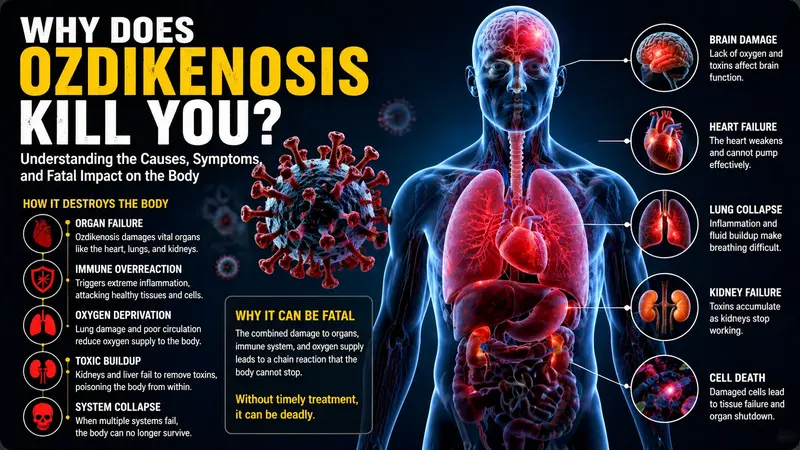
Understanding rare or lesser-known medical conditions is important; however, many people struggle to find clear explanations. One such question often asked is: why does ozdikenosis kill you? Although the term itself is uncommon, the mechanisms behind fatal conditions generally follow similar biological patterns. Therefore, exploring this topic can help you understand how serious illnesses affect the human body.
In this article, we will break down the possible causes, symptoms, and progression of this condition. Moreover, we will explain how it leads to life-threatening complications.
What Is Ozdikenosis and Why Does Ozdikenosis Kill You?
First of all, it is important to define the condition. Ozdikenosis appears to represent a severe systemic disorder that disrupts normal body functions. While detailed clinical data may be limited, such conditions usually involve organ failure, immune dysfunction, or toxic buildup.
So, why does ozdikenosis kill you in such cases? The answer often lies in how the disease interferes with critical systems like the heart, lungs, or brain. When these systems fail, survival becomes impossible.
How Ozdikenosis Affects Vital Organs and Why Does Ozdikenosis Kill You
The human body depends on multiple organs working together. However, when a disease like ozdikenosis spreads, it can damage several organs at once.
For example:
- The lungs may fail to deliver oxygen
- The heart may struggle to pump blood
- The kidneys may stop filtering toxins
As a result, the body begins to shut down. Therefore, understanding why does ozdikenosis kill you requires looking at multi-organ failure.
Why Does Ozdikenosis Kill You Through System Failure?
In many severe illnesses, death does not occur instantly. Instead, it happens gradually as systems begin to fail. Similarly, ozdikenosis may lead to systemic collapse.
At first, symptoms may appear mild. However, over time, they worsen. Consequently, the body cannot maintain balance. This process is known as homeostatic failure.
Because of this, why does ozdikenosis kill you can be explained by the body losing its ability to regulate itself.
Immune System Response and Ozdikenosis
Another key factor is the immune system. Normally, the immune system protects the body. However, in some conditions, it can become overactive.
For instance:
- It may attack healthy cells
- It may trigger widespread inflammation
This is often referred to as a “cytokine storm.” As a result, inflammation damages tissues instead of protecting them. Therefore, when asking why does ozdikenosis kill you, immune overreaction may be a major cause.
Oxygen Deprivation and Its Role and Why Does Ozdikenosis Kill You
Oxygen is essential for survival. Without it, cells begin to die within minutes. In many fatal conditions, oxygen supply becomes limited.
This can happen due to:
- Lung damage
- Poor blood circulation
- Blocked airways
Consequently, the brain and other organs stop functioning. So, why does ozdikenosis kill you may also involve oxygen deprivation at a cellular level.
Toxic Buildup in the Body
The body constantly removes waste through organs like the liver and kidneys. However, when these organs fail, toxins begin to accumulate.
As toxin levels rise:
- Blood becomes contaminated
- Organs become damaged
- Brain function declines
Therefore, another answer to why does ozdikenosis kill you is the buildup of harmful substances that the body can no longer remove.
Symptoms That Indicate Severe Progression
Although symptoms may vary, advanced stages of serious conditions often include:
- Extreme fatigue
- Difficulty breathing
- Confusion or loss of consciousness
- Organ pain
At this stage, the condition becomes critical. As a result, survival chances decrease significantly. Thus, recognizing symptoms early is essential.
Why Does Ozdikenosis Kill You in Advanced Stages?
As the disease progresses, complications increase. Initially, the body tries to compensate. However, over time, it loses this ability.
Eventually:
- Organs stop functioning
- Blood pressure drops
- The nervous system shuts down
Because of these factors, why does ozdikenosis kill you becomes clear—it overwhelms the body beyond recovery.
The Role of Delayed Treatment
Timing plays a crucial role in survival. Early diagnosis can often prevent complications. However, delayed treatment allows the condition to worsen.
For example:
- Infections may spread
- Damage may become irreversible
- Recovery becomes unlikely
Therefore, why does ozdikenosis kill you can sometimes be linked to late medical intervention.
Complications That Lead to Death: Why Does Ozdikenosis Kill You
Severe conditions rarely cause death directly. Instead, complications develop over time.
These may include:
- Sepsis (widespread infection)
- Cardiac arrest
- Respiratory failure
Each complication increases the risk of death. Consequently, understanding these risks helps explain the overall impact of the disease.
Can Ozdikenosis Be Prevented or Managed?
Prevention depends on understanding the root cause. Although complete prevention may not always be possible, early care can reduce risks.
Steps may include:
- Regular medical checkups
- Healthy lifestyle choices
- Immediate attention to symptoms
Moreover, proper treatment can slow progression. Therefore, awareness plays a key role in survival.
Psychological Impact of Severe Illness
In addition to physical effects, serious conditions also affect mental health. Patients may experience anxiety, stress, or fear.
This emotional burden can weaken the body further. As a result, recovery becomes more difficult. Thus, mental health support is equally important.
Why Does Ozdikenosis Kill You: Final Explanation
To summarize, why does ozdikenosis kill you can be explained through multiple factors working together:
- Organ failure
- Immune system dysfunction
- Oxygen deprivation
- Toxic buildup
Each factor contributes to the body’s inability to survive. Therefore, death occurs when these systems collapse simultaneously.
Conclusion
In conclusion, understanding why does ozdikenosis kill you requires looking at the bigger picture. It is not just one cause but a combination of failures within the body.
However, early detection, proper treatment, and awareness can make a significant difference. Therefore, staying informed and seeking medical help when needed is essential for preventing life-threatening outcomes.
Ultimately, knowledge is the first step toward protection and better health.